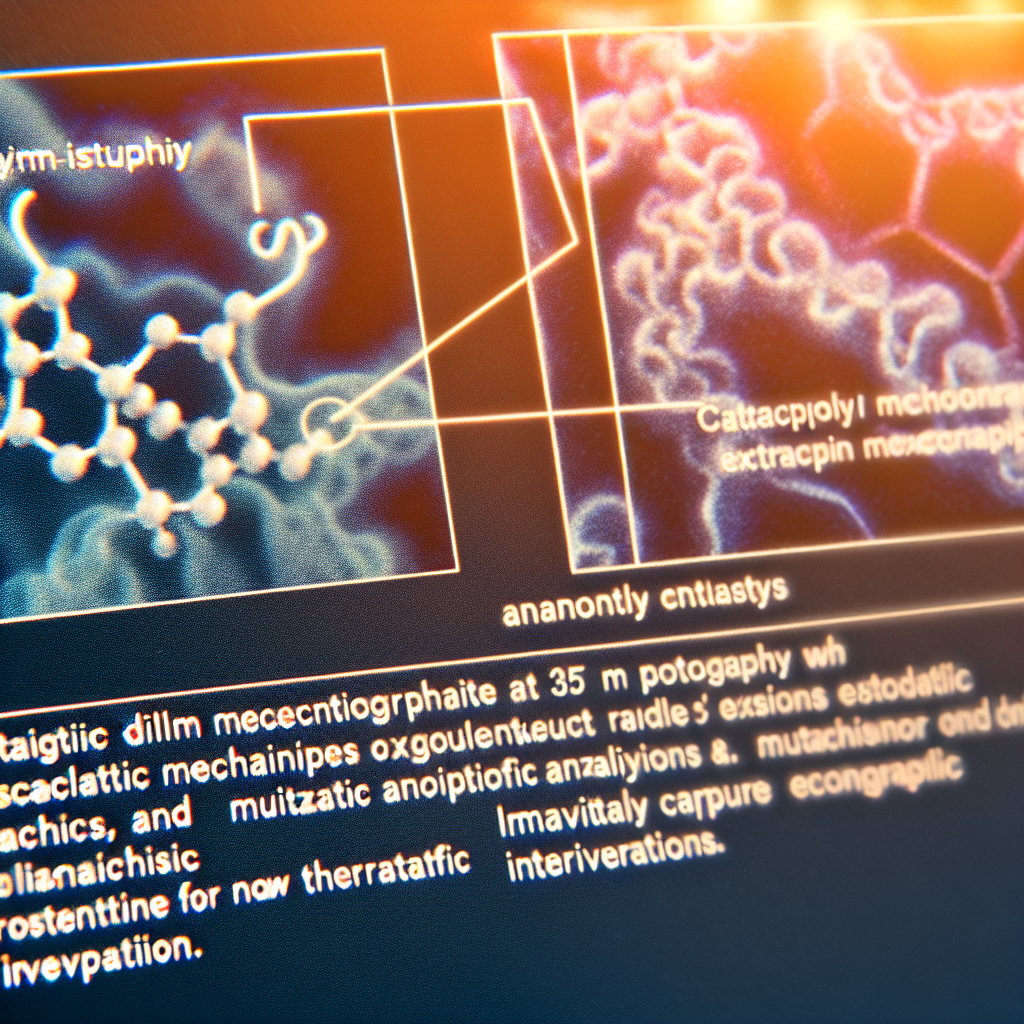
New Insights in Biochemistry: Catalytic Mechanisms Unraveled
Published on October 23, 2023
Introduction
The study of enzymatic reactions has long been an essential component of biochemistry, providing insights into the fundamental processes of life. In a new research article published in Nature Communications, scientists present groundbreaking findings that enhance our understanding of catalytic mechanisms, potentially opening avenues for novel therapeutic interventions.
Research Overview
This comprehensive study utilized advanced computational techniques alongside experimental approaches to elucidate the intricacies of enzyme activity. The researchers focused on a specific class of enzymes, revealing how subtle changes in their structure can significantly affect their catalytic efficiency.
Key Findings
- Structural Dynamics: The team discovered that dynamic structural changes in the enzyme’s active site are critical for catalytic function.
- Electrostatic Interactions: They identified key electrostatic interactions that stabilize the transition state of the enzymatic reaction, enhancing the rate of catalysis.
- Mutational Analysis: Through targeted mutations, the researchers were able to demonstrate how specific alterations can modulate enzymatic activity, providing direct evidence of the enzyme’s adaptable nature.
Implications of the Study
The findings from this study not only advance the theoretical framework of enzymatic catalysis but also hold significant implications for drug design. By understanding how to manipulate enzymatic activity, researchers may develop more effective therapeutic agents targeted at various diseases.
Conclusion
As the body of knowledge around enzymatic mechanisms continues to expand, this study is a critical step forward in biochemistry. It underscores the potential for innovative approaches to modulate enzyme activity, which could pave the way for new treatments in medicine and biotechnology.
“`
Leave a Reply